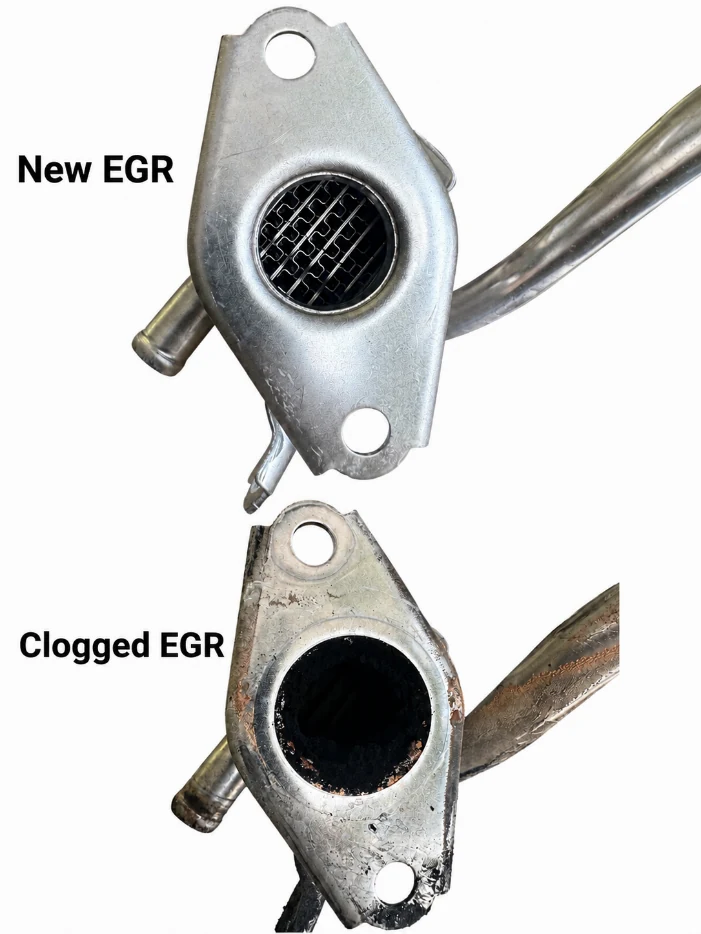
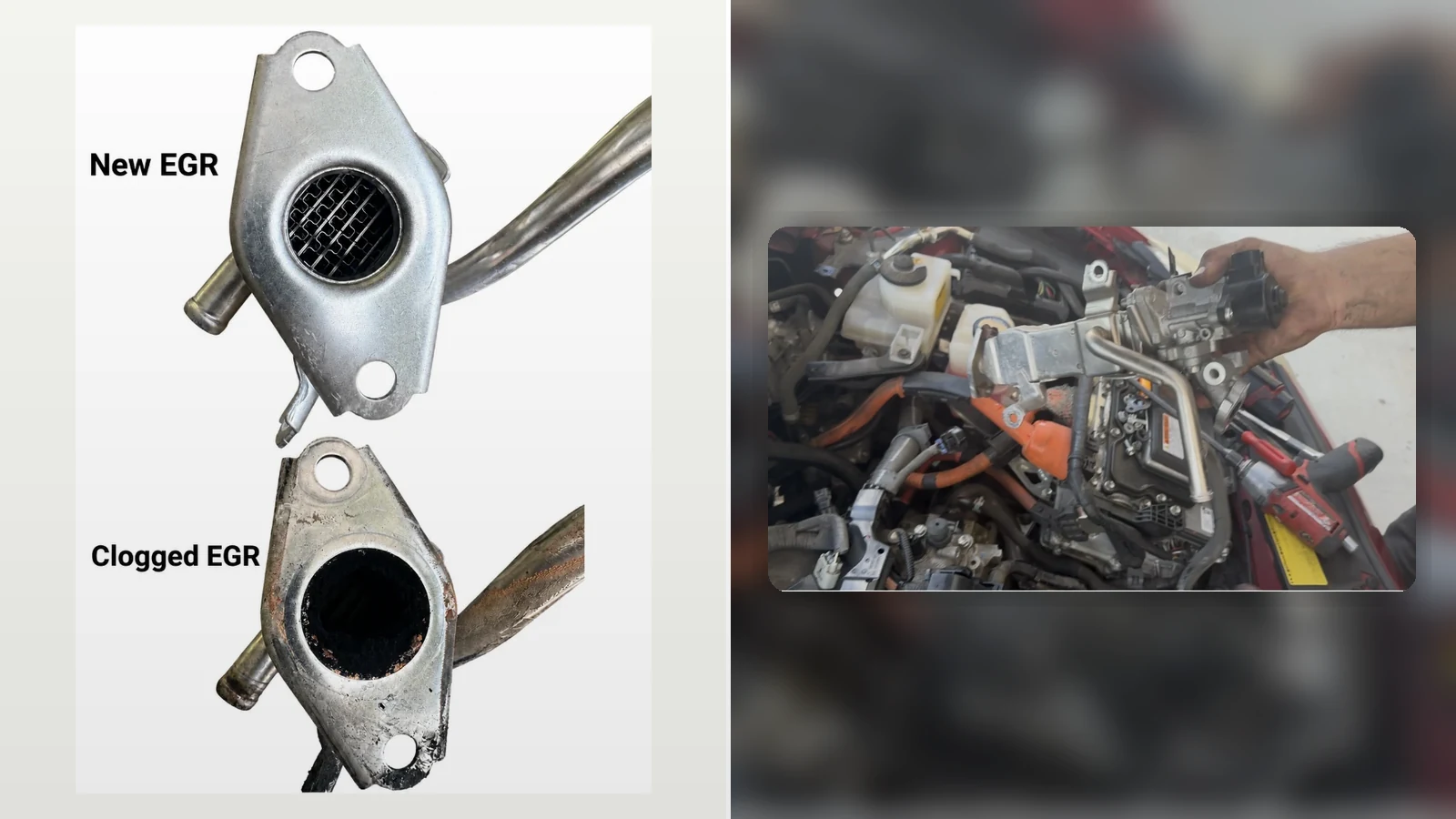
If you own a third-generation Toyota Prius or Lexus CT200h, you have probably been warned about EGR problems and maintenance. The EGR (exhaust gas recirculation) system is one of the most common maintenance issues on higher-mileage Prius vehicles and can contribute to the car running rough, misfiring, poor fuel economy, and in some cases even head gasket failure.
What Does the EGR System Do?
The EGR system takes a small amount of exhaust gas and routes it back into the engine's intake stream. While this may sound counterintuitive, the recycled exhaust lowers combustion temperatures and helps reduce emissions. It is designed to improve efficiency and emissions, but over time the system can become restricted by carbon buildup.
Why Does the Prius EGR System Clog?
Every gasoline engine produces carbon deposits. After thousands of miles, these deposits gradually accumulate inside the EGR system.
The Prius is particularly susceptible because:
- The engine frequently starts and stops.
- The EGR passages are relatively small.
- Carbon deposits continue building throughout the life of the vehicle.
As these deposits accumulate, EGR flow becomes restricted and eventually uneven between cylinders. We most often see cylinder 1 clog up first, followed by cylinder 2.
Components of the Prius EGR System
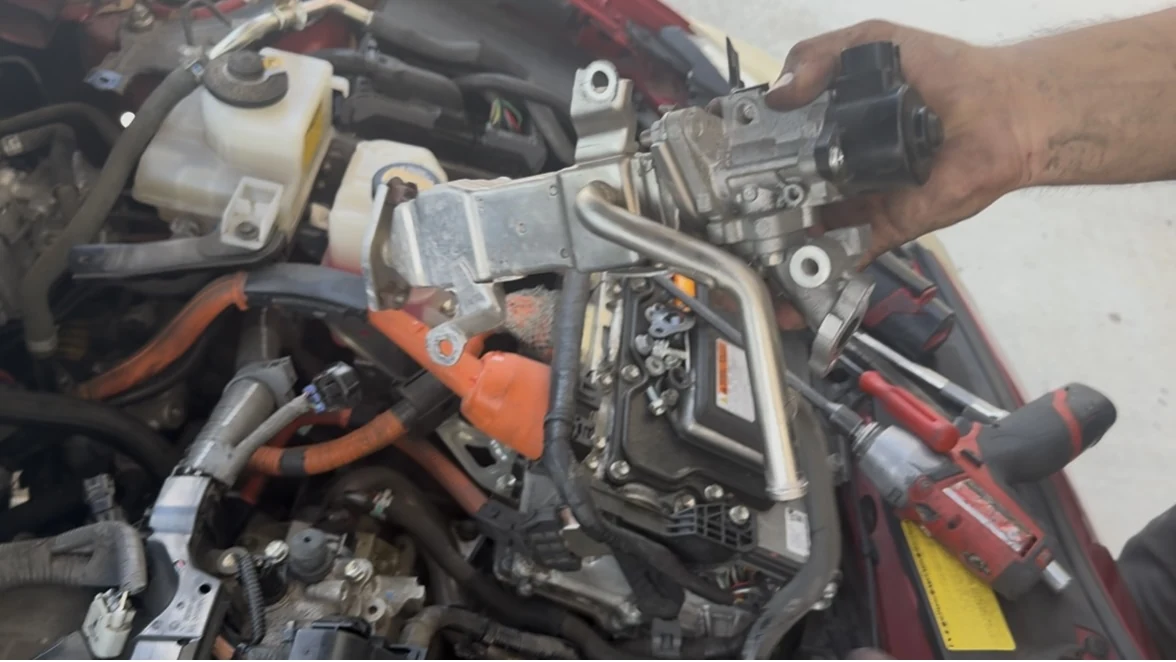
Most of what you read about the EGR system online only focuses on the EGR valve, but the EGR system actually consists of several major components.
EGR Valve
The EGR valve is an electronically controlled valve that regulates how much exhaust gas enters the intake system.
In many cases, the valve itself can be cleaned and reused if it still operates correctly. However, if the motor, position sensor, or valve mechanism has failed, replacement is usually required.
EGR Cooler
The EGR cooler is a heat exchanger that cools exhaust gases before they enter the intake manifold.
The cooler is the most challenging part of the Prius EGR system to clean effectively. Unlike the EGR pipe or intake manifold, the cooler contains dozens of narrow internal passages that can become heavily restricted by carbon deposits. While many DIY methods can improve flow, it is difficult to verify that all internal passages have been completely restored.
At Hometown Hybrids, we use professionally restored EGR coolers that undergo an industrial cleaning process specifically developed for Prius EGR systems. The coolers are cleaned internally and externally before being returned to service, providing a level of restoration that is difficult to achieve with typical home cleaning methods.
EGR Pipe
The stainless steel pipe connecting the cooler to the intake manifold is one of the easiest components to inspect.
Because it can be removed quickly, it is often used as a visual indicator of overall system condition. In most cases, the pipe can be cleaned successfully and reused.
Intake Manifold
Many owners are surprised to learn that the intake manifold contains small EGR distribution passages.
These passages are especially important because they distribute exhaust gas evenly among the cylinders. Over time they can become partially or completely blocked.
What Happens When the System Becomes Restricted?
As carbon accumulates, EGR flow decreases and may no longer be distributed evenly between cylinders.
Common symptoms include:
- Check engine light and code P0402
- Cold-start rattling or shaking
- Engine misfires
- Reduced fuel economy
- Rough idle
- Increased combustion temperatures
In severe cases, prolonged operation with restricted EGR flow may contribute to head gasket failure due to increased thermal stress inside the engine.
Preventive Maintenance
The best way to avoid major EGR-related issues is periodic inspection and cleaning or replacement before severe blockage develops.
We recommend inspecting the EGR system somewhere between 100,000 and 150,000 miles, particularly on vehicles that see frequent short-trip driving.
Addressing carbon buildup early is usually far less expensive than waiting for drivability problems or major engine repairs to occur.
Final Thoughts
The Prius EGR system plays an important role in engine efficiency and emissions, but like many modern emissions systems, it requires maintenance as the vehicle ages.
A clogged EGR system does not happen overnight. Carbon deposits accumulate gradually over years of operation. Regular inspection and cleaning of the EGR pipe, EGR cooler, EGR valve, and intake manifold can help maintain proper engine operation and potentially prevent more costly repairs down the road.
Not sure whether to repair or sell?
Repair the battery to keep driving it, or sell the hybrid instead.