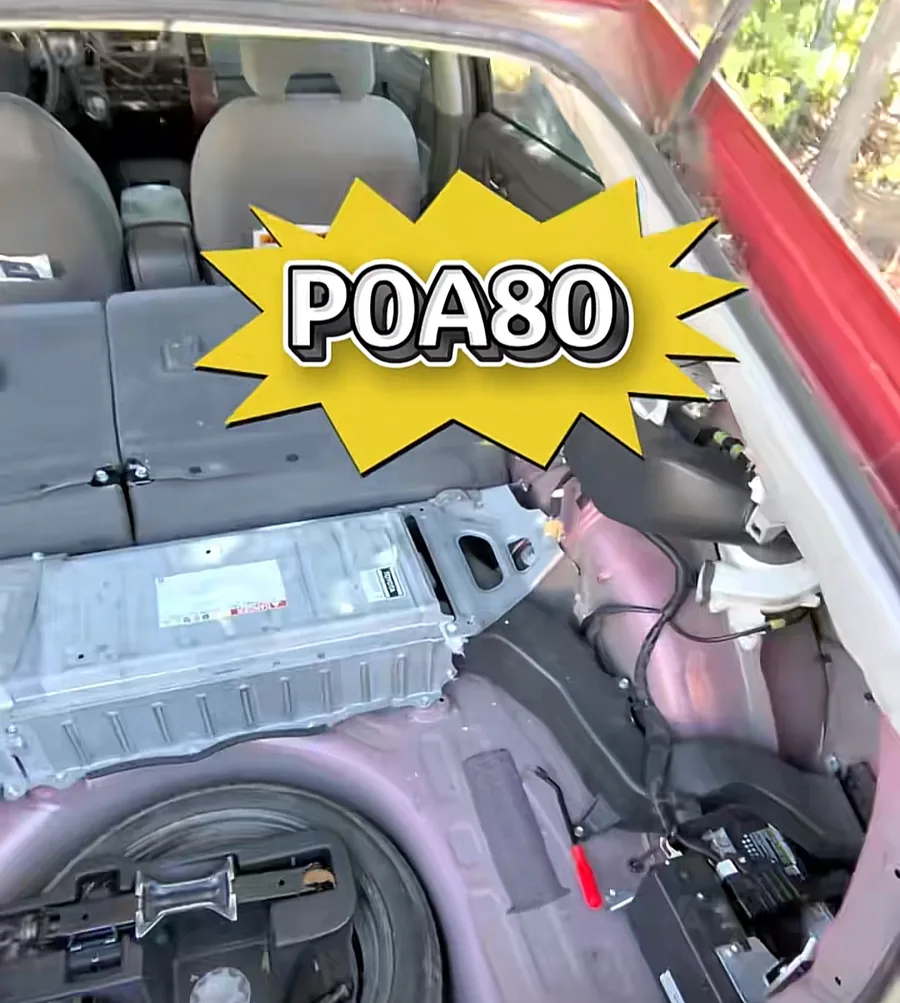
If you own a Prius long enough, eventually you'll end up Googling something about the hybrid battery. Unfortunately, that's also where you'll find a LOT of questionable information.
Rebuilt packs start at $1,195 installed with a 2-year / 50,000-mile warranty. Our mobile technicians come to your home, office, or wherever your vehicle is located.
Mobile service in Houston, Austin, Dallas, San Antonio
We've been working with hybrid batteries for a long time, and we've heard just about every myth there is. Some of them started with a little bit of truth and got exaggerated over the years. Others are just plain wrong.
So let's clear up a few of the most common Prius hybrid battery myths we still see online.
Myth #1: A Prius Hybrid Battery Only Lasts 8–10 Years or 100,000 Miles
There really isn't a magic expiration date for a Prius battery.
We've seen batteries fail as soon as 45,000 and we've seen original batteries still running well past 300,000 miles. There are a LOT of factors that affect battery longevity!
Age definitely matters, but so do heat, driving habits, how often the car sits, battery temperature, cooling and just plain luck.
The warranty period isn't the expected lifespan of the battery either. It's just the warranty period.
So if somebody tells you, "Your Prius has 150,000 miles, the battery has to be bad," that's not a diagnosis.
On the other hand, if you're buying a 15- or 20-year-old Prius with the original battery, it's reasonable to consider the age of that battery when deciding what the car is worth.
Myth #2: A Reconditioned Battery Is Basically the Same Thing as a New Battery
Nope.
A properly refurbished battery can be a perfectly reasonable option, especially on an older car where spending the money for a new battery may not make sense.
But refurbished and new are not the same thing.
A refurbished battery is made from used battery modules. Those modules can be tested, cycled, capacity tested and matched with similar modules to build a good functioning battery pack.
What you can't do is magically make a 10- or 15-year-old battery module chemically new again.
A new battery has new cells. Our refurbished battery has rigorously tested and matched used cells.
Both can have a place depending on the age of the car, your budget and how long you're planning to keep it. We offer both for exactly that reason.
Related: Refurbished or New Hybrid Battery: What's Best for You?
Myth #3: If a Prius Battery Module Has Good Voltage, It's Good
This one causes a LOT of bad DIY battery repairs.
You pull a module (cell) out of the battery, grab your multimeter and it reads somewhere around 7.5 volts.
Looks good, right? Not necessarily.
A failing battery module can have perfectly normal voltage sitting on a workbench with nothing connected to it. The important question is what happens when you actually ask that module to do some work.
- Does the voltage collapse under load?
- How much capacity does it actually have?
- Does it self-discharge overnight?
- Does its voltage behave differently than the modules around it?
- Whats the internal resistance?
Two modules can show almost identical voltage with a multimeter while one has dramatically less usable capacity than the other.
Voltage is useful information. It's just not the whole story. We test over a dozen different metrics when building a refurbished battery.
Myth #4: Just Replace the One Bad Module and the Battery Is Fixed
Technically, you can replace one bad module.
And technically, the car might drive perfectly afterward, but for how long? A week, a month?
If one module has failed in a 15-year-old battery, the other 27 modules didn't suddenly become 15 years younger because you replaced one of them.
You're also putting a replacement module with its own capacity, internal resistance and history into a battery containing a bunch of other aged modules.
This is why we see the same story over and over:
Bad module. Replace module. Clear P0A80. Car works.
Three weeks later... P0A80 again.
Now another module is bad.
Replacing one module can be useful for testing, experimenting or getting a car moving temporarily, but we don't consider it a proper long-term battery repair.
Related: Why Swapping a Single Hybrid Battery Module Will Cause a P0A80 Code Again.
Myth #5: Hybrid Battery Problems Are Always Caused by Bad Cells
The battery modules get most of the attention, but there are a lot of other things inside and around a Prius battery.
You have bus bars, nuts, voltage-sensing wires, temperature sensors, the battery ECU, cooling components and a whole bunch of electrical connections.
Any of those can potentially cause problems. We've seen damaged voltage-sensing harnesses. We've seen corrosion. We've seen connection problems. We've seen battery cooling fans completely packed with hair and dirt.
That's why diagnostic codes and actual testing matter.
"Hybrid battery problem" does not automatically mean "bad cell."
And this works the other way too: finding some corrosion inside the battery doesn't automatically mean you've found the reason the battery is failing.
More on that one below.
Myth #6: When the Prius Battery Gauge Goes From Full to Nearly Empty, the Battery Actually Went From 100% to 0%
Fortunately, no.
Toyota doesn't normally allow the Prius to fully charge or fully discharge the hybrid battery.
That little battery icon on your dashboard is showing you the portion of the battery's state of charge that the car allows itself to use.
So when you see eight green bars, that doesn't mean every battery cell is sitting at a literal 100% charge.
And when it drops down to a couple purple bars, your battery isn't literally at 0%.
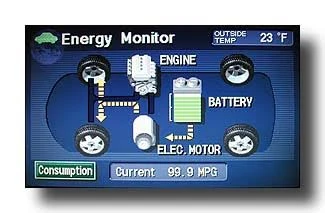
The Prius intentionally operates the battery within a much narrower range because constantly charging a battery completely full and draining it completely empty would be pretty hard on it.
Now, if your battery gauge suddenly starts bouncing from nearly full to nearly empty and back again very quickly, THAT can be a sign of reduced battery capacity.
Think of it like a tiny gas tank. It fills quickly because there's not much room left to fill, and it empties quickly for the same reason.
Myth #7: Reconditioning or Balancing Makes an Old Battery Like New Again
We wish.
Reconditioning can absolutely help a battery. That's part of what makes proper battery refurbishing possible. Cycling can recover some usable capacity, and balancing helps get the modules operating at similar states of charge. But there's a big difference between improving an old battery and making it new again.
Battery cells physically and chemically age.
This is also why simply "balancing" a battery without actually testing the individual modules doesn't tell you very much.
You can have a beautifully balanced collection of worn-out modules.
Myth #8: Cleaning the Corrosion Will Fix P0A80
We see this advice online ALL THE TIME.
"Take the battery apart, clean the bus bars and it'll fix the P0A80."
Could corrosion cause battery problems?
Absolutely.
Corrosion can increase connection resistance. It can affect voltage-sensing connections. A damaged or corroded sensing harness can absolutely cause some strange battery readings.
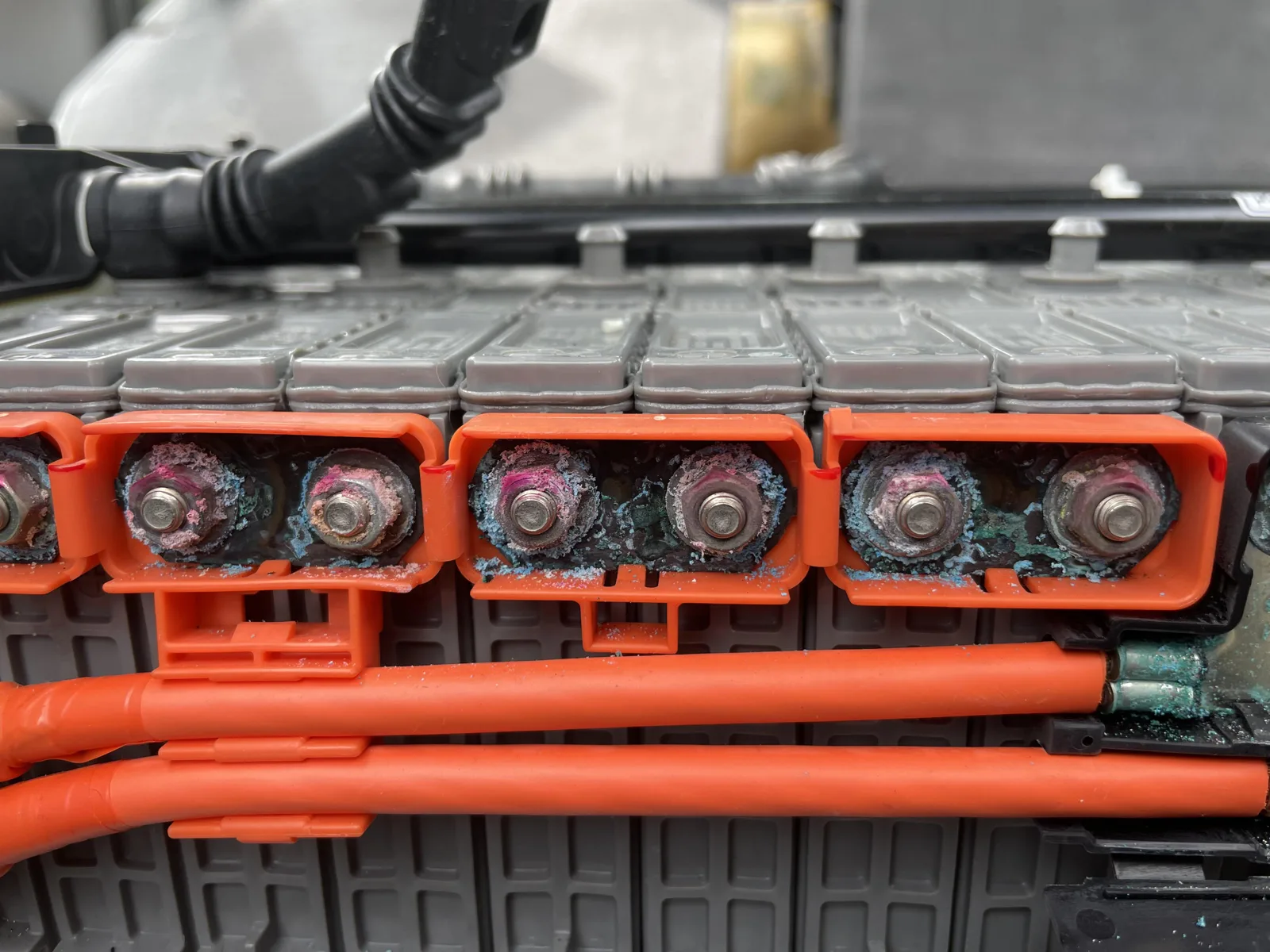
So yes, corrosion should be removed and damaged components should be replaced.
But here's the important part:
Cleaning corrosion cannot restore capacity to a failed battery module.
If your P0A80 is being caused by one battery block dropping dramatically under load because one of its modules is worn out, polishing the copper bus bars isn't going to put capacity back into that module.
Sometimes people clean the bus bars, clear the codes and the car works again for a little while. They assume the corrosion was the problem.
Then P0A80 comes back.
Clearing the code temporarily reset the warning. Cleaning the bus bars didn't magically rebuild the cells. The right answer is to diagnose WHY the computer set the code in the first place.
Related: What P0A80 Actually Means in a Prius.
Myth #9: The Red Triangle or "Check Hybrid System" Message Means Your Hybrid Battery Is Bad
This one causes a lot of unnecessary battery replacements.
The red triangle is a non-specific warning light.
"Check Hybrid System" is a non specific warning message.
These messages can also be caused by a bad engine pump, failed inverter, weak 12v battery etc.
Your Prius has a huge number of systems being monitored by several different computers. Problems with the inverter, engine, cooling system, brake system, HV isolation, electrical system and plenty of other things can turn on warning lights.
We've had plenty of people call us and say:
"My hybrid battery is bad. The triangle came on."
Our first question is usually:
"What codes does it have?"
Sometimes the answer is P0A80 and yes, we're dealing with a battery problem.
Sometimes the codes have absolutely nothing to do with the battery.
Never replace a hybrid battery based solely on a warning light. Read the diagnostic codes first.
Related: Can You Still Drive a Prius With a Bad Hybrid Battery and Code P0A80?
Myth #10: If the Hybrid Battery Cooling Fan Is Loud, the Fan Must Be Bad
Battery failure gets blamed on the fan a lot more often than it should.
If the battery cooling fan suddenly starts running loudly, that usually doesn't mean the fan itself is failing. The Prius controls fan speed based on battery temperature. If the battery is getting hotter than normal, the car may simply be commanding the fan to run faster.
And a worn-out hybrid battery can generate more heat than a healthy one.
So typically the loud fan is actually a symptom of the battery problem or just a really hot Texas day!
What Prius myths have you seen circulating online?
Need hybrid help? Send us a message to 979-848-6868 or sales@hometownhybrids.com
Not sure whether to repair or sell?
Repair the battery to keep driving it, or sell the hybrid instead.