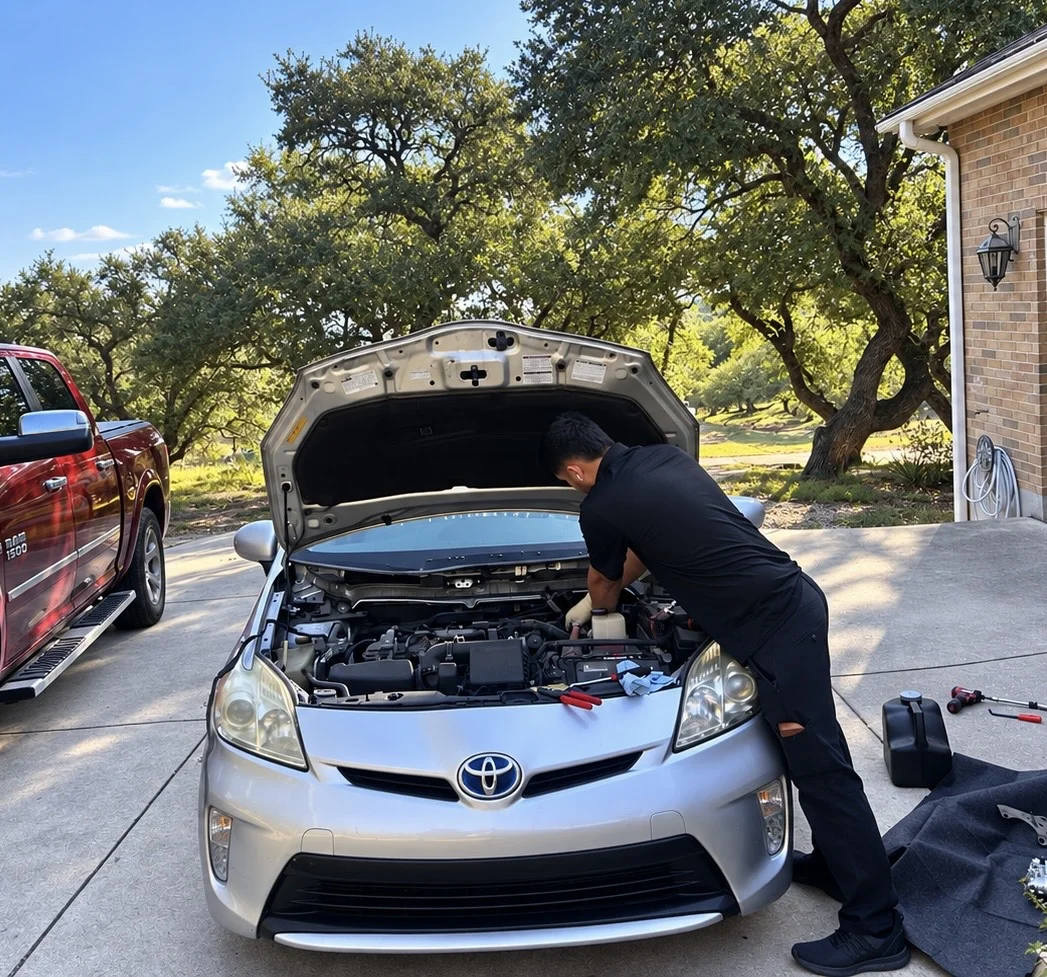
Buying a used hybrid? Before you make the purchase, it's important to have it inspected by someone who understands hybrid vehicles.
A regular pre-purchase inspection can cover the basics: tires, brakes, suspension, engine condition, fluids, and general vehicle condition. But hybrids have additional components that need attention, and those are often the things buyers should be most concerned about.
At Hometown Hybrids, our pre-purchase inspection goes beyond a standard used-car inspection. We look at the vehicle as a whole, but we also perform several hybrid-specific checks that can help identify potential problems before you buy.
See Our Pre-Purchase Inspection Checklist
See what our inspection covers: View the Hometown Hybrids pre-purchase inspection form (PDF, 2 pages).
Read the inspection form as accessible text.
What Makes Our Hybrid PPI Different?
1. Hybrid Battery Performance Testing
One of the most important parts of our inspection is evaluating the high-voltage hybrid battery.
We don't simply check for warning lights or diagnostic codes. Our battery inspection includes:
- Measuring voltage differences (Delta V) between battery blocks at 25% and 55% state of charge.
- Checking hybrid battery temperature sensors.
- Testing hybrid battery cooling fan operation.
- Evaluating battery block behavior under load through in-vehicle testing when conditions allow.
This gives us a better understanding of how the battery is performing at the time of inspection.
2. Engine Electric Water Pump
Many hybrid vehicles use an electric engine coolant pump rather than relying solely on a traditional belt-driven pump. We specifically check this component because cooling system problems can lead to expensive engine repairs.
3. Inverter Cooling System
The inverter is a critical part of a hybrid vehicle's operation. It has its own cooling system, and problems with coolant circulation can lead to overheating and costly repairs.
Our inspection includes checking inverter coolant and circulation rather than simply looking at the engine cooling system.
4. Hybrid Brake System
Hybrid braking systems can be more complicated than conventional braking systems. Our inspection includes checking the brake actuator pump interval, in addition to inspecting brake linings, discs, calipers, and other accessible brake components.
5. Hybrid Diagnostic Checks
We also check for diagnostic trouble codes that may reveal problems with the hybrid system or other vehicle components.
We Inspect More Than Just the Hybrid System
Of course, the rest of the vehicle matters too. Our PPI also covers tires, suspension, engine condition, 12V battery health, fluids, leaks, lights, and other important components.
We want you to have a better understanding of the vehicle you're purchasing, not just the condition of its hybrid battery.
Buying a Used Hybrid? Get It Checked First!
A hybrid can be a great used-car purchase, but expensive problems can hide behind a vehicle that looks and drives perfectly fine.
At Hometown Hybrids, we specialize in Toyota, Lexus, and Nissan hybrid vehicles. Our hybrid-specific pre-purchase inspection is designed to look beyond what a typical used-car inspection might cover.
Don't take a chance on an expensive surprise. Have your next hybrid inspected by people who specialize in them.
Call or text Hometown Hybrids at 979-848-6868 to schedule a pre-purchase inspection.
Not sure whether to repair or sell?
Repair the battery to keep driving it, or sell the hybrid instead.